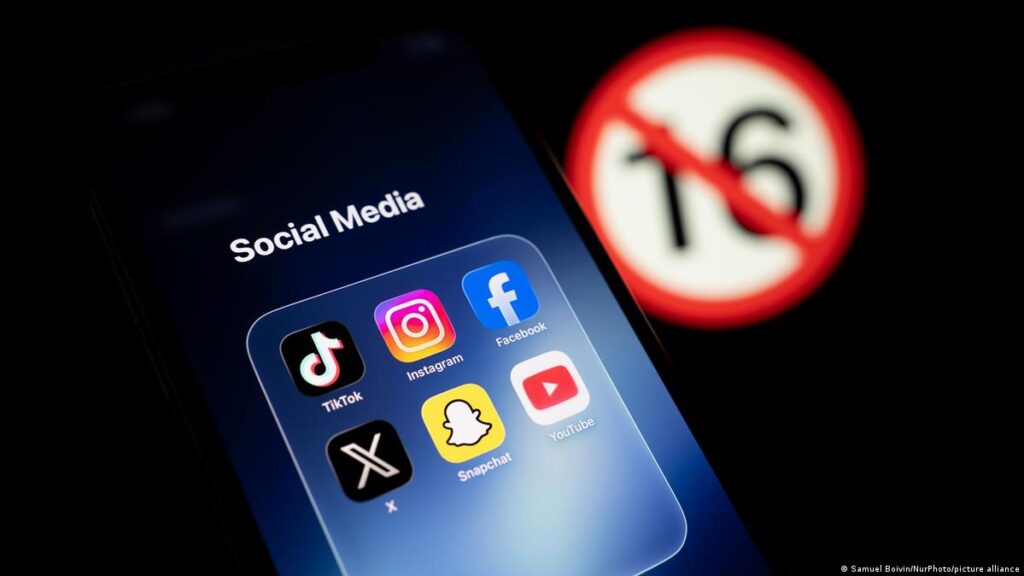

(Source: Samuel Boivin/NurPhoto/picture alliance)
Did You Know? Legal Topics for Secondary Students –Social Media Ban – Part 1: The Proposed Legislation
Have you heard about the proposed social media ban? Wondering what will happen to your social media accounts? If there will be exceptions? Or how to voice your concerns to law makers?
In this three-part series, we consider the proposed legislation for the federal social media ban, the role of media literacy in education as a tool to support critical thinking for secondary youths in online forums and media sites, and avenues for youth to advocate for legislative change where they disagree with proposed legislation.
On June 10, 2026, the Government of Canada introduced Bill C-34, the Safe Social Media Act, which would enact two new Acts: The Digital Safety and the Digital Safety Commission Act. This proposed legislation will include an age-restriction for children under 16 and require media services to include safety requirements to reduce youth’s exposure to certain harms and high-risk interactions. Through the proposed Digital Safety Act, a legislative framework will operate via 3 core duties – the Duty to Protect Children, the Duty to Act Responsibly, the Duty to Make Certain Content Inaccessible.
The proposed Act is intended to target 7 different types of harms:
Did You Know……
K-12 Teacher Resources:
Government of Canada – News Release: Introduction of legislation to make social media services safer for children: https://www.canada.ca/en/canadian-heritage/news/2026/06/government-of-canada-introduces-legislation-to-make-social-media-services-and-ai-chatbots-safer-for-children.html
Government of Canada – Bill C-34, the Safe Social Media Act: https://www.canada.ca/en/canadian-heritage/services/safe-social-media-act.html
Media Smarts – Privacy Rights of Children and Teens: https://mediasmarts.ca/teacher-resources/privacy-rights-children-teens