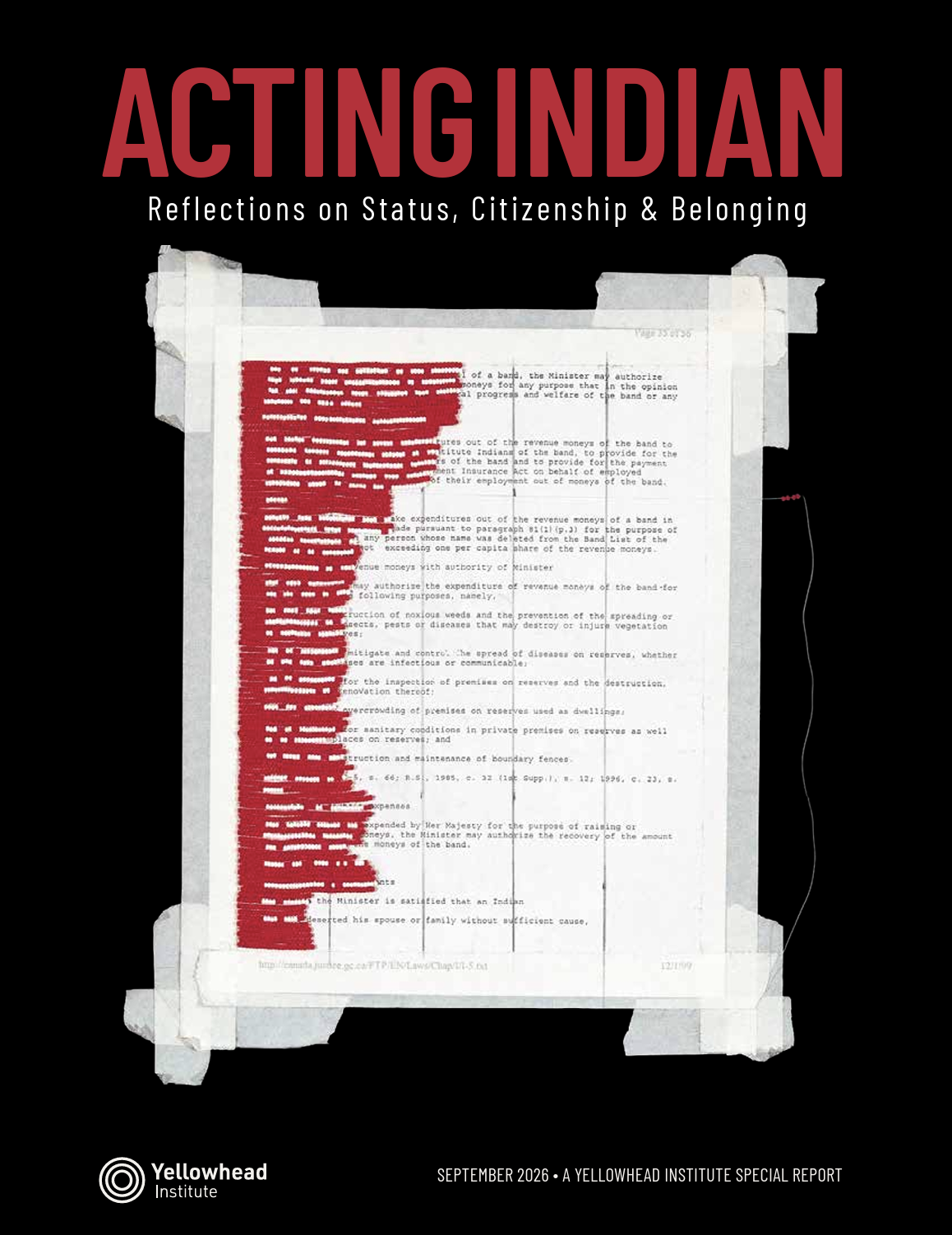
Published by Yellowhead Institute, Acting Indian: Reflections on Status, Citizenship & Belonging brings together the perspectives of seven First Nations thinkers, including Haida, Ts’msyen, St’át’imc, Cree, Anishinaabe, and Mohawk, to examine one of the most fundamental questions surrounding the Indian Act: “Can the law repair what the law has broken?” In doing so, it prompts the readers to reflect on: Who gets to define Indigenous citizenship and belonging?
The report comes at an important moment. As Canada moves to amend the Indian Act through Bill S-2, the contributors ask whether changes to federal legislation can address the damage caused by a federal framework that has disrupted Indigenous kinship systems and replaced relationships of belonging with administrative categories.
The report points to a crucial distinction: status is not the same as belonging, and a registration number is not the same as citizenship. It begins with a powerful teaching: when Elder Emily Norton-baa was asked, “What makes someone Anishinaabe?” she answered, “If you work hard for the people.”
Citizenship, from this perspective, is not simply a legal status or designated entitlement. It is a relationship that is grounded in responsibility, reciprocity, and care. Colonial legislation created categories intended to regulate and replace Indigenous systems of kinship and citizenship. Yet changing those legal categories cannot, by itself, restore the relationships and responsibilities that colonial policies disrupted.
As a teaching resource, the report invites us to move beyond learning about colonial policy and instead ask deeper questions: Who gets to define belonging? Can citizenship be legislated? What makes a system decolonial? And what does it mean to belong to a community through responsibility and relationships rather than simply through legal status?
For more information, see the report: https://yellowheadinstitute.org/report/acting-indian-reflections-on-status-citizenship-belonging/