Image Source: https://media.licdn.com/dms/image/v2/D5622AQG39oHXdx8yGQ/feedshare-shrink_800/B56Z2yyh0HIsAc-/0/1776821083656?e=1784764800&v=beta&t=W5sYLK9G3yZd7CY5k5JcDIIVH1MkuzYRgas-RuK_ysQ
Part 1 – Cowichan Decision & Misinformation
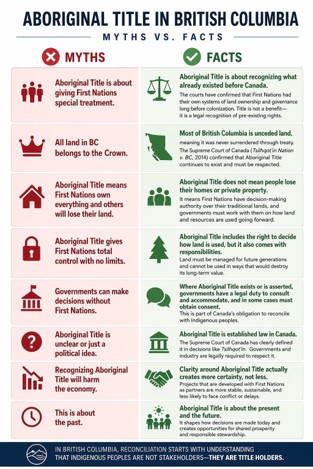
Since the BC Supreme Court recognized the Quw’utsun (Cowichan) Nation’s Aboriginal title to lands at Tl’uqtinus on the Fraser River in Richmond, Cowichan Tribes v. Canada (Attorney General), 2025 BCSC 1490, public debate has been dominated by concern about private property rights. Much of this conversation has been shaped by misinformation, flattening a complex legal decision into fear-driven soundbites and, concerningly, fuelling a rise in anti-Indigenous racism.
Last week, Montrose Properties, the area’s largest private landowner, sought to reopen the case, arguing it had been unfairly excluded from the original trial and that its fee simple interests are directly affected by the declaration of Aboriginal title. The BC Supreme Court dismissed the application, finding that reopening a trial spanning more than 500 days would amount to an “abuse of process for relitigation.” Yet the public conversation continues to frame the case as a threat to private property, even though the Court repeatedly emphasized that the Cowichan Nation did not seek to invalidate privately held titles or dispossess homeowners.
As lawyers Mae Price, Tejas Madhur, and Maya Ollek have clarified, Aboriginal title and fee simple are distinct but coexisting legal regimes. Aboriginal title is a constitutionally protected collective right grounded in prior occupation and governance of the land, while fee simple is a Crown-derived form of private ownership. The Court did not “erase” private property, nor did the Cowichan Nation seek to dispossess individual homeowners or businesses. Rather, the decision speaks to overlapping legal orders that must be reconciled through negotiation, not fear or litigation alone. At its core, the ruling is not about eliminating private property rights; it is about recognizing that different legal orders exist on the same lands and must be reconciled.
But this is not a new conflict. It is the latest chapter in a much longer history—one that Indigenous Nations have been navigating for generations—the “Land Question” in British Columbia. Stay tuned for Part 2 of our “Land Question” in British Columbia series.
Sources cited: